

People fear boredom
People are terrified of being bored. It is not the absence of stimulation that scares them, but the feeling of being stuck with nothing to distract them from themselves. Boredom has become a state to escape from, not to sit with. When Dickens used the word “boredom” for the first time in 1852, it described a kind of restlessness that had no outlet. Centuries earlier, Seneca compared it to nausea, a physical unease that came from too much stillness. The feeling hasn’t changed, but our coping tools have.
In 1938, psychologist Joseph Barmack studied factory workers who spent long hours repeating the same mechanical tasks. Their solution was chemical. Caffeine, amphetamines, and ephedrine helped them feel alive when nothing around them was.
Today, the chemistry is digital. The same restless energy now finds release through notifications, short videos, and endless scrolls. Teenagers say they grab their phones the moment boredom hits. It feels like control, but it’s really a loop. They start choosing, then get chosen by the feed. Hours disappear without memory or meaning. Adults aren’t different. According to GWI, nearly 1 in 4 people say they turn to video entertainment simply to fill spare time. Another 17% do it out of routine, and 15% to escape. The moment there’s no noise, they create one. They scroll between screens, refresh timelines, watch series while checking messages. The habit for many is not entertainment, it’s avoidance - a series of escape.
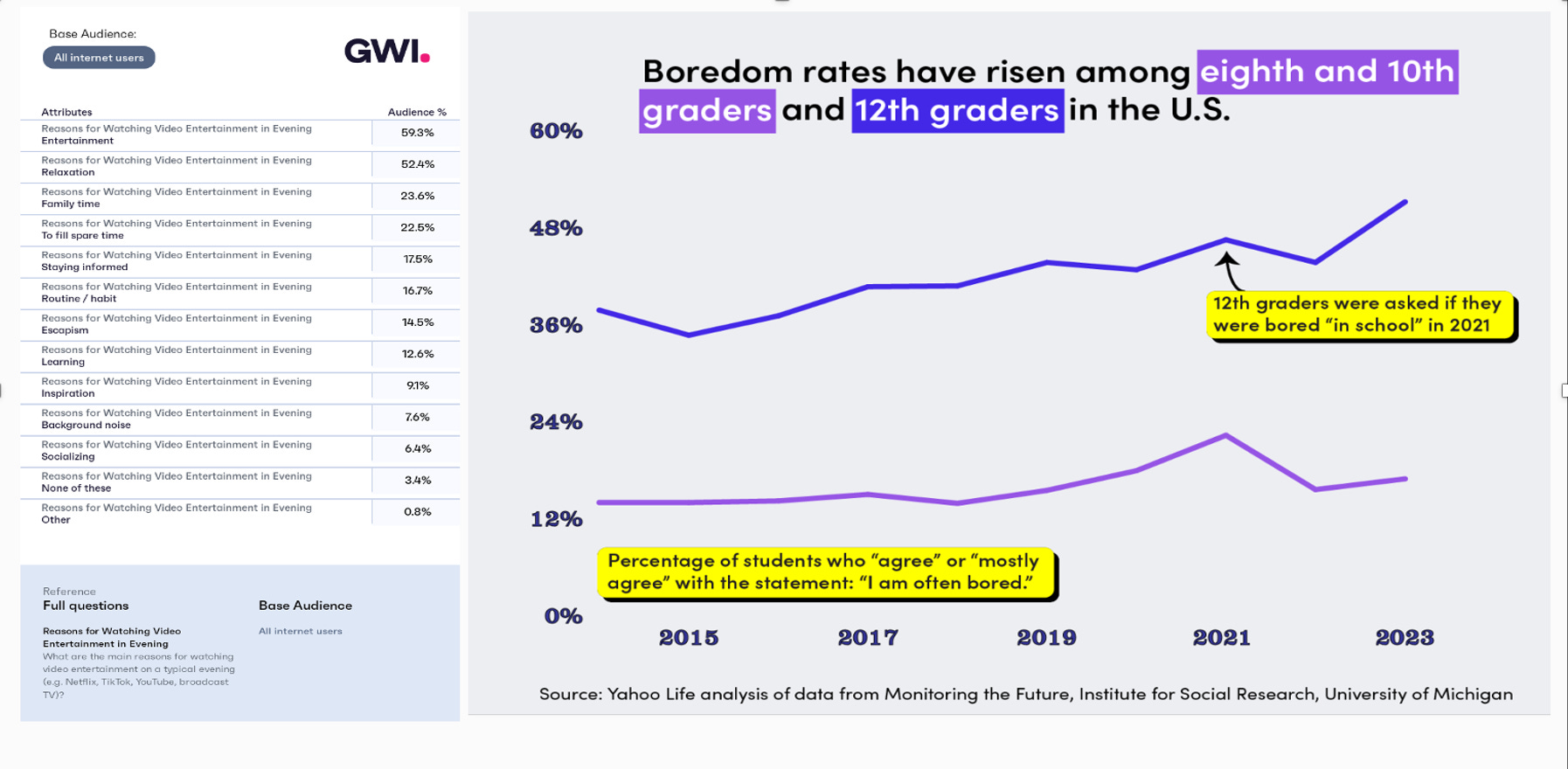
Boredom used to pass on its own. Now, it’s just constantly there, hiding behind a reel. What began as a way to fill empty moments has turned into a way of living.
Being intentionally unintentional
We no longer seek information or connection; we’re flooded with it. Instead of browsing the web or interacting with people we know, we’re now fed an endless stream of content. What was once self-directed has turned into passive consumption, marked by constant switching and distraction.
Over the past decade, the average young person has lost almost half their social time. In the US, hours spent with friends have dropped from around four a day in 2010 to less than two by 2021, while time spent alone has nearly doubled. Across Europe, the share of people who don’t socialise weekly has risen from 1 in 10 to 1 in 4. What has replaced those hours isn’t rest or reflection, it’s routine. Screen time now fills the same social and emotional space that friendships once did. Young people report spending most of their free time gaming, scrolling, or streaming, activities they rank among the least meaningful but hardest to stop. What began as a coping mechanism for boredom has become a behavioural default.
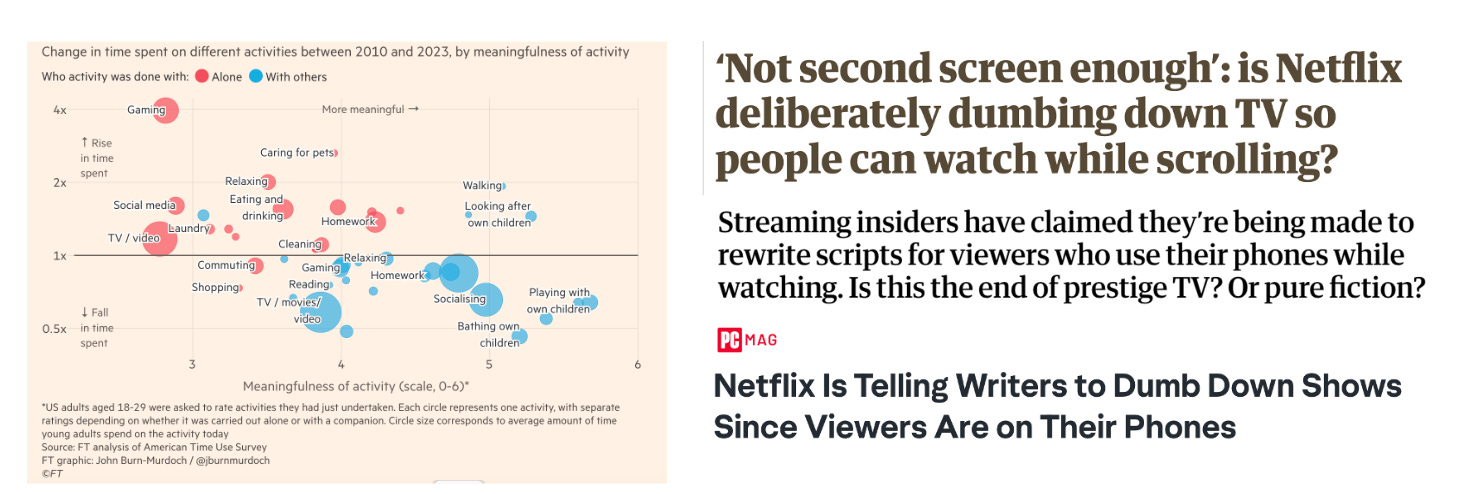
The constant need to refresh, reply, or react trains the brain to seek stimulation over substance. We’ve built a culture of constant motion — a loop of unintentional actions that keep us busy enough to avoid emptiness, but not engaged enough to feel meaning. Despite the hours being filled, they feel unfulfilled. Focus now competes with a never-ending stream of cues designed to fragment it.
Paying attention feels like a chore
Across 17 global markets, YouGov (2024) found that the majority of viewers multitask while watching TV. 60% Indians, 57 % of Australians and UAE residents, and over half of Americans and Britons admit to using their phones “very” or “fairly often” during shows. The smartphone has become a second screen not for enrichment but for escape. Staying focused on one thing for long has begun to feel unnatural.
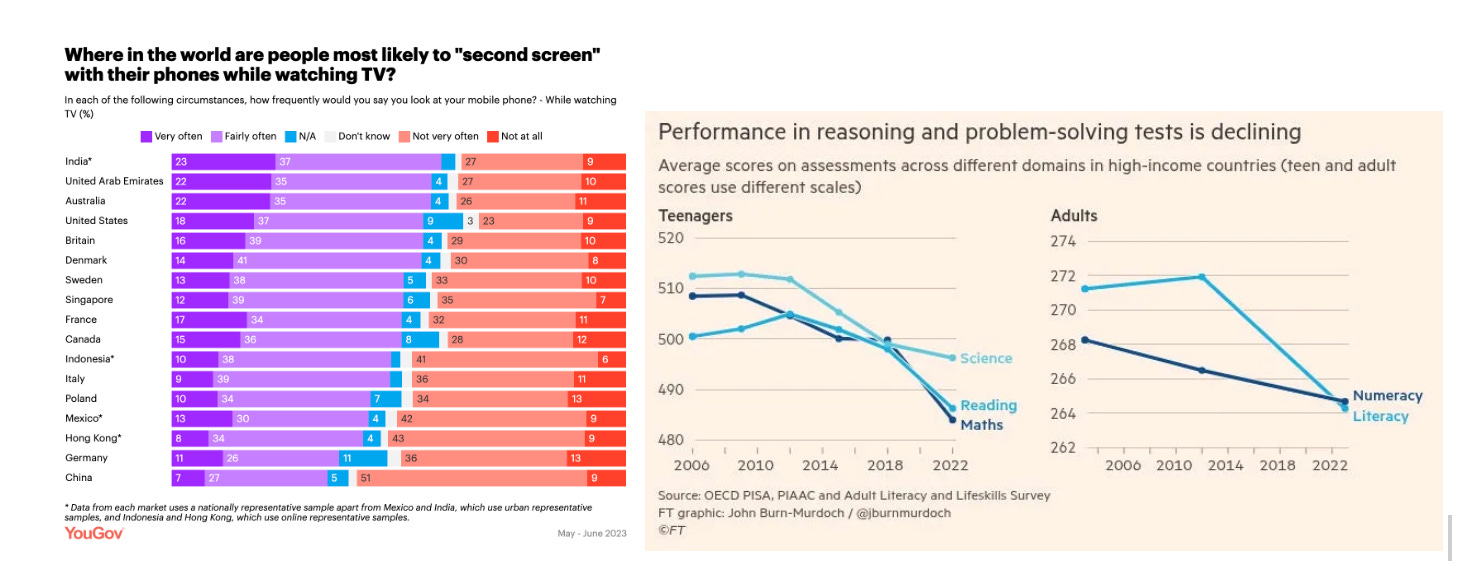
Netflix is designing for this. In 2023, actor-director Justine Bateman revealed that some showrunners were told their series “wasn’t second-screen enough.” BBC host Miquita Oliver described “second-screen pitching,” where studios actively commission shows people can half-watch while scrolling. Content is being built to accommodate distraction, stories that don’t punish you for drifting away. But the effort gap extends beyond screens. Even online, attention is collapsing. Average engagement rates hover around 0.15 % on Facebook, while Instagram interactions have fallen between 16-28% year-on-year.
This pattern extends beyond how we consume content to how we think. According to the long-running Monitoring the Future study, the share of 18-year-olds who report difficulty thinking, concentrating, or learning new things was stable through the 1990s and 2000s but began a rapid upward climb in the mid-2010s, precisely when smartphones became constant companions. This mirrors a wider decline in reasoning and problem-solving scores across all age groups after 2012 — not because people became less intelligent, but because their mental environment changed. We practise less concentration, less deliberation, less pause. The same downward trend appears among adults as well.
People scroll not because they’re captivated but because it’s easier than stopping. It’s how they cope with an environment that never stops. Constant stimulation has drained their attention reserves. The more they divide their focus, the harder it becomes to hold it anywhere. Paying attention now feels like effort, and most people simply don’t have the energy for it. Boredom no longer signals emptiness, it signals overload.
Brands need to design for depleted attention
People have learned to ration focus, to give as little of it away as possible. The brands that stand out now are the ones that understand this exhaustion and design for depleted attention. Brands need to create micro-moments of intention and recognition.
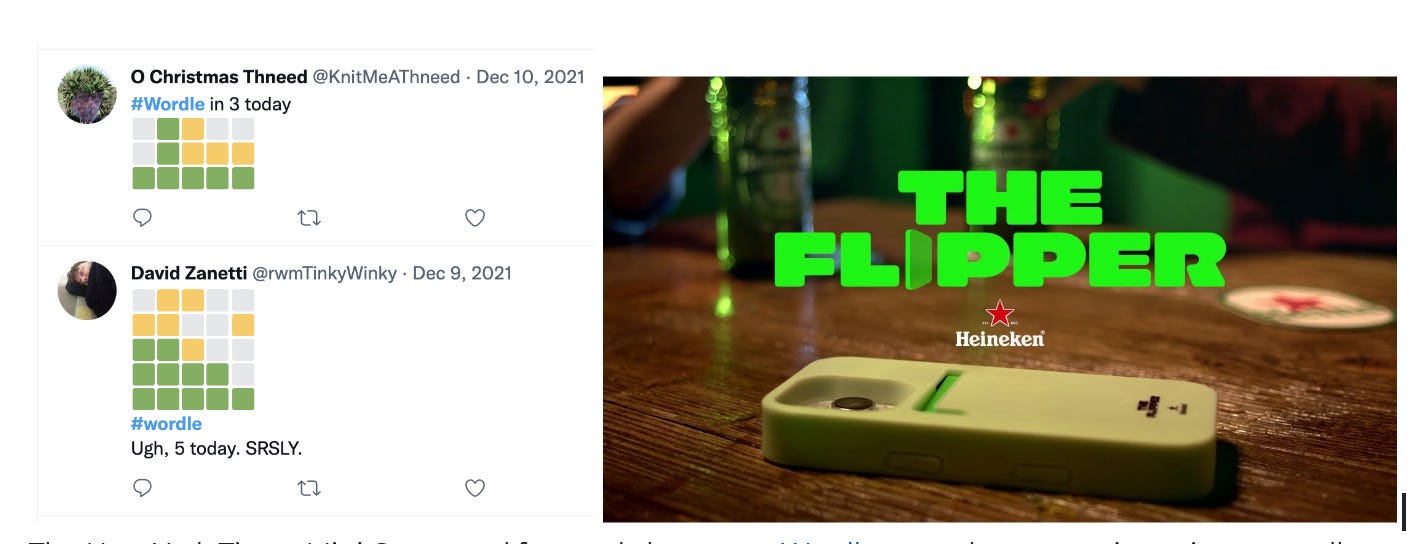
The New York Times Mini Crossword famously known as Wordle turned a spare minute into a small act of focus. It became popular because it created a small, intentional daily ritual in an online world that rarely pauses. British psychologist Lee Chambers explained that the game’s appeal lied in how it stimulated both the language and logic-processing areas of the brain, triggering a satisfying hit of dopamine without overstimulation. Its design — one puzzle a day, the same for everyone — turned focus into a shared experience rather than an endless habit. The grid of green and yellow tiles became a quiet symbol of connection, something players could complete, share, and move on from.
Heineken wanted to tackle screen distraction during social moments, but instead of preaching, it chose to play. Partnering with inventor Simone Giertz, they built The Flipper — a robotic phone case that automatically flipped phones face down whenever someone said “cheers.” It was absurd, funny, and real. The campaign turned a simple social ritual into a small act of attention. By blending satire with invention, it made people look up, laugh, and momentarily disconnect. Without any media spend, it sparked 4 billion impressions and a wave of DIY recreations, proving that sometimes the quickest way to restore connection is through a brief, intentional pause.
These experiences didn’t stretch attention, they gave it boundaries. People are not running out of attention; they’re running out of patience for how it’s used. The brands that will matter next won’t chase attention; they’ll protect it. Whether it’s a one-minute puzzle, a robotic phone case, or a small digital pause, the goal isn’t to win more time but to make the little we have feel better spent.