
Owning Less, Indulging More

People are swinging between cutting back to save and borrowing to spend
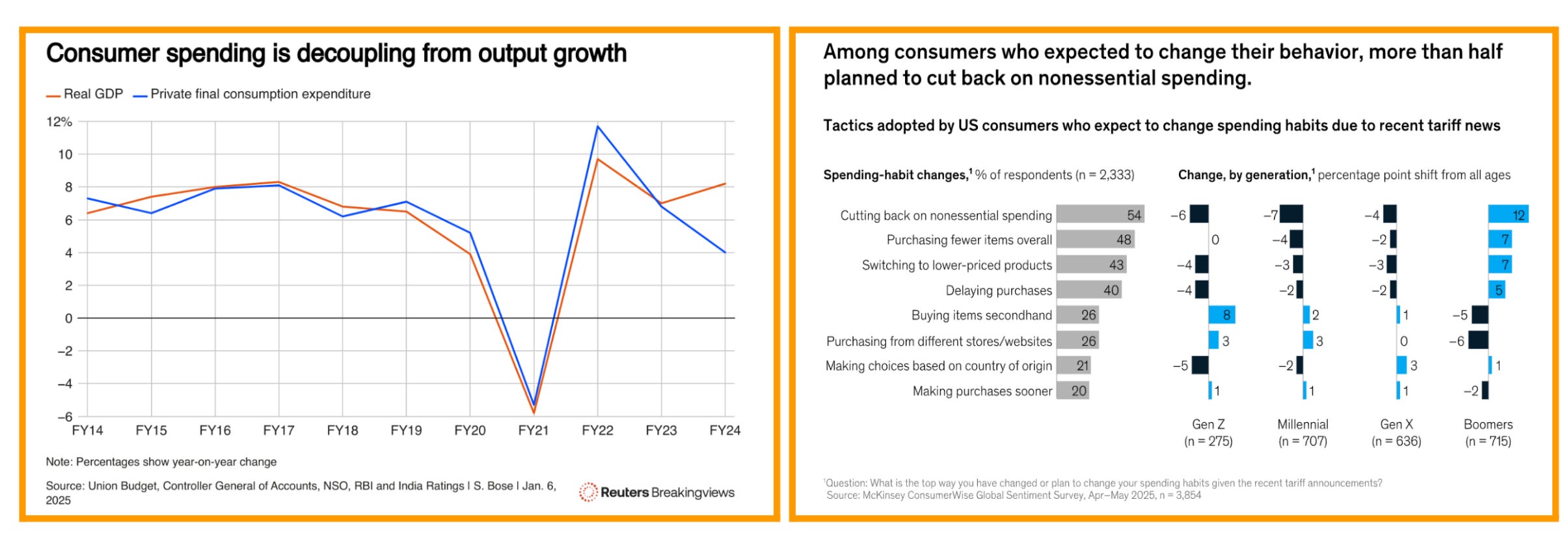
The story of spending today isn’t one of abundance, it’s one of restraint. From India to the US, people are planning to cut back not out of choice but out of necessity. In India, household savings have dropped to a historic low of 5.1% of GDP, while 30% to 45% of income is locked into EMIs. Inflation stood at 5.6% in 2023–24, and the debt is rising with personal loans up to ₹55.3 lakh crore - $600Bn (+13.7% YoY). The same caution defines the US, where sentiment fell 32% in May 2025, with half of consumers delaying discretionary purchases and three-quarters trading down to cheaper brands or secondhand.
These aren’t the choices of confident consumers but of households stretched thin who are sustaining today by borrowing from tomorrow or by cutting back. It has become both a financial and emotional hedge, a way to preserve a fragile sense of stability. Across markets, the same pattern emerges: people are firefighting daily expenses, paring back small indulgences, and managing life as it comes, week by week.
Life milestones are being delayed or changed because they might be out of reach
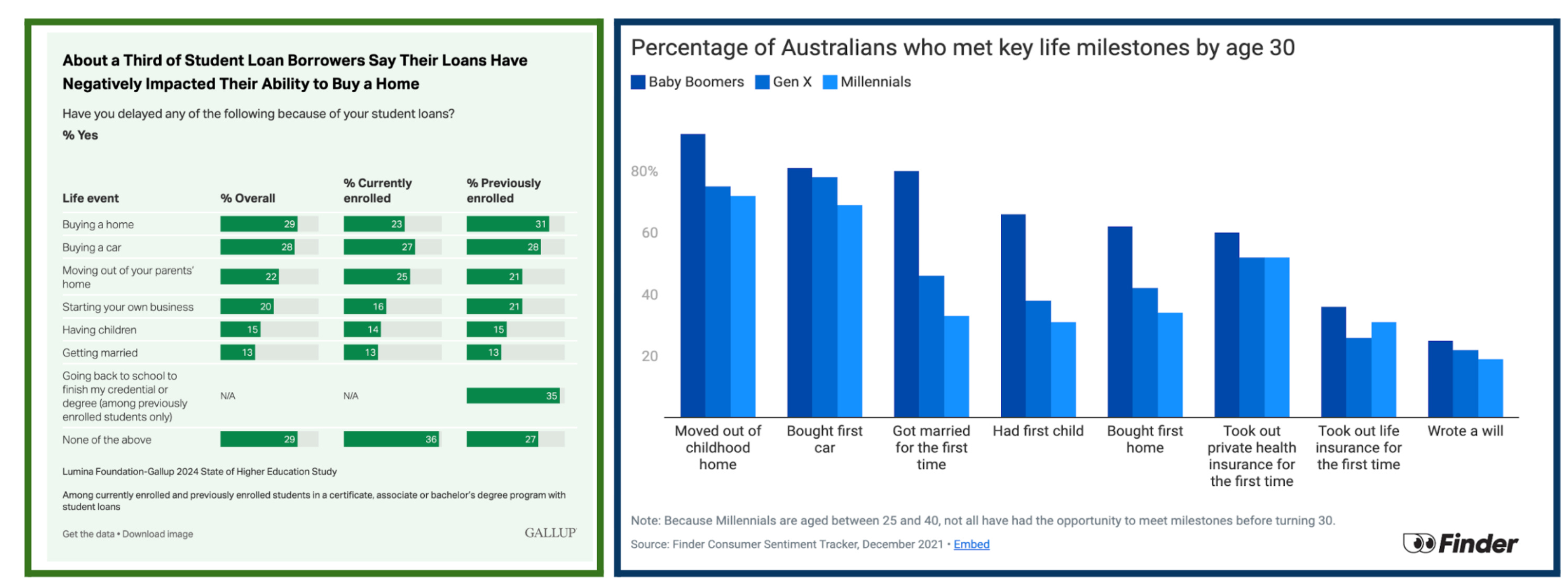
The cost of this short-term survival mode is that long-term goals are being neglected. What once might have been saved for education, security cushions, or lifestyle improvements, etc is now being redirected to keep pace with rising costs and financial strain. Gallup shows 71% of U.S. student-loan borrowers have delayed major life events, not because they no longer want them, but because debt and day-to-day pressures make them impossible to reach.
In Australia, over half of adults admit pushing back milestones like moving out or upgrading homes, as the cost of living steals the headroom for future planning.
While in the U.K., younger generations talk openly of “milestone anxiety,” knowing what’s expected but watching the timeline slip further out of their grasp. The BBC captured this vividly: a TikTok trend where young people compare their lives with their parents’ shows how traditional markers—marriage, home ownership, children, are now out of reach, with house prices at eight times average salaries. Instead, many are redefining milestones in smaller, more personal terms like travel, self-care, or leaving an unhappy job.
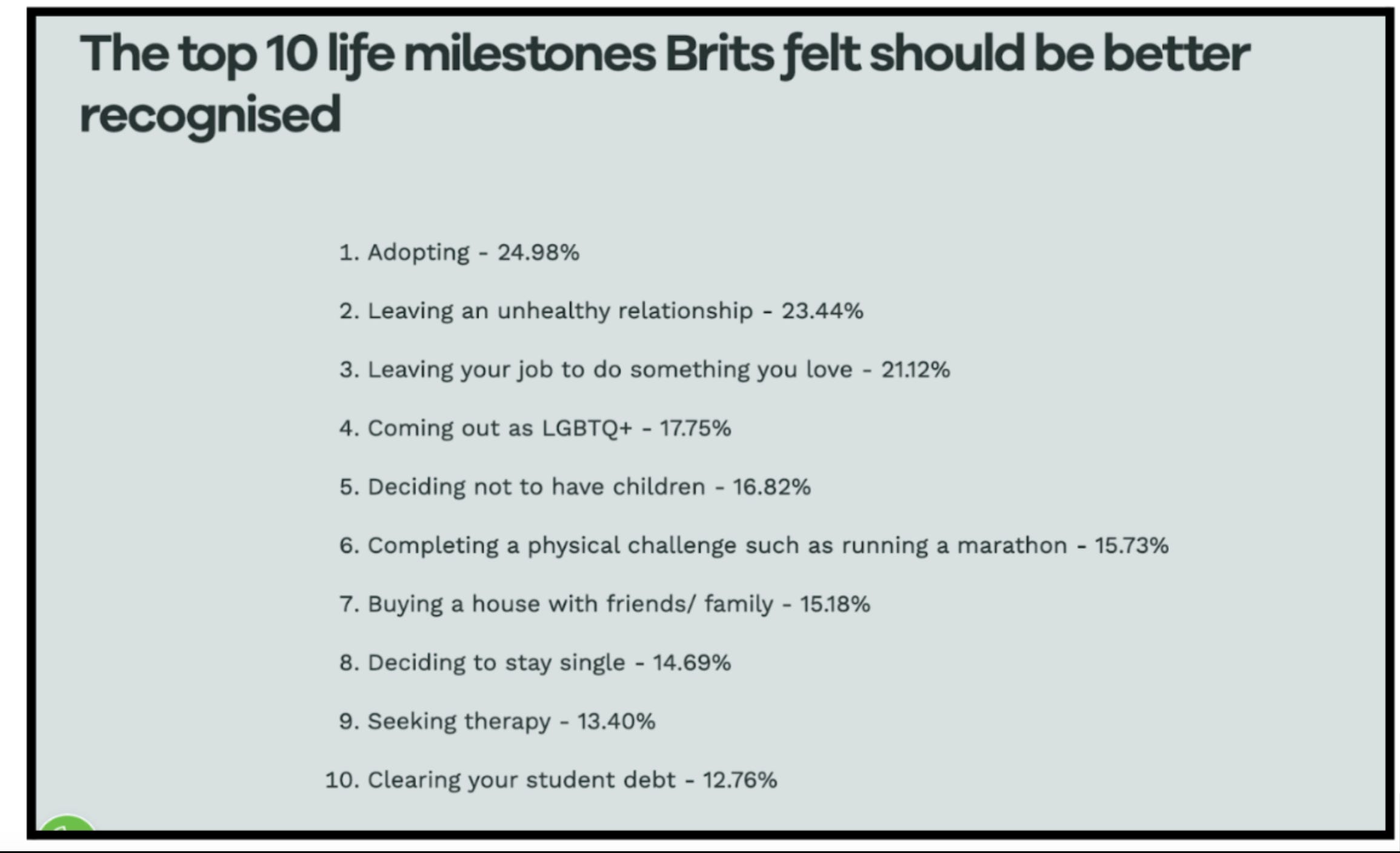
The point isn’t that long-term goals have disappeared, it’s that survival has taken the driver’s seat, and milestones have been shoved into the back. People are still carrying those ambitions, but they’re being continually rescheduled and pushed to “later.” This doesn’t reflect a lack of aspiration, it reflects a world where progress is measured less by life stages and more by whether you can stay afloat. This delay is shaping an entire generation’s sense of what achievement even looks like.
Long-term milestone spends are being traded for short-term splurges
While long-term goals feel out of reach, people are making space for “little treats” that deliver quick comfort in the present. This is best explained by the lipstick effect, an economic theory which shows that during downturns, consumers cut back on expensive purchases like houses, holidays, or luxury fashion, but still spend on small, affordable indulgences. A £20 lipstick or a fancy coffee becomes a manageable way to feel good, preserve a sense of luxury, and escape daily pressures without overspending. In fact, the Guardian reports that prestige lip product sales in the UK rose 16% year-on-year to £80.4 million in the first half of 2025, despite the ongoing cost-of-living crisis.
What’s changed now is that this instinct for “affordable luxury” has expanded into a broader cultural and economic phenomenon known as treatonomics. Described as the “lipstick effect on steroids,” treatonomics captures how consumers today are not just indulging in small luxuries but are also prioritizing one-off splurges like collectibles, concerts, or special experiences that bring bursts of happiness even in uncertain times. These guilt-free indulgences, whether £20 or £200, help people reclaim joy when bigger milestones such as homeownership or long holidays feel unattainable.

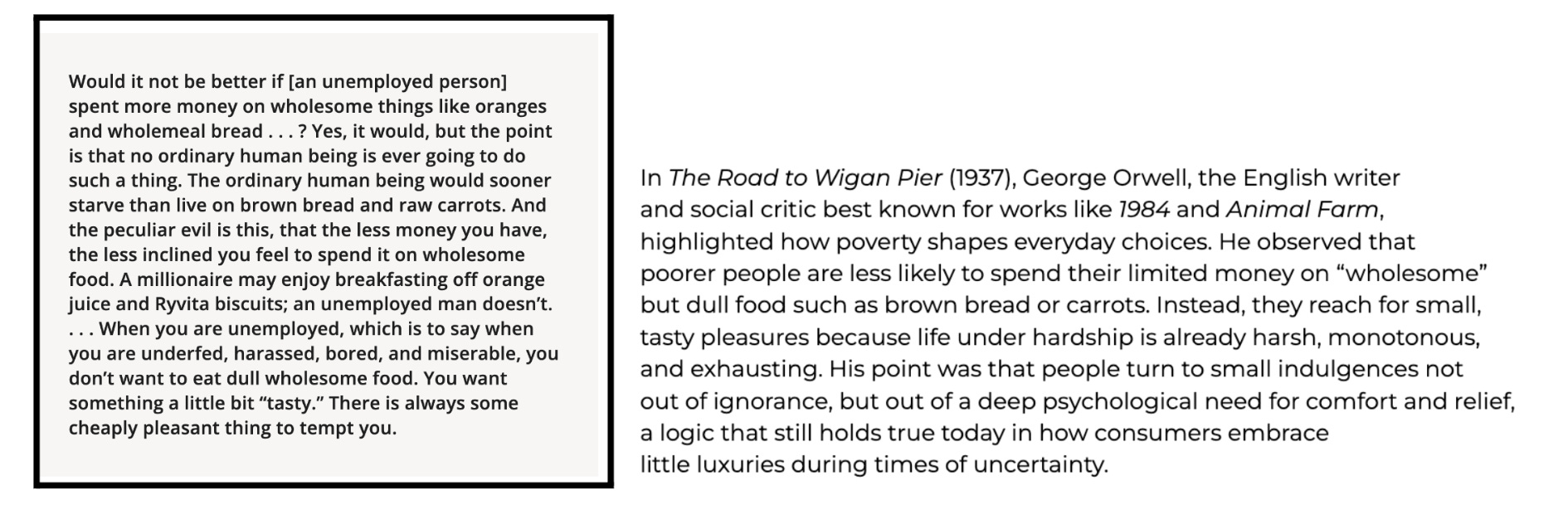
Although, surveys consistently show that consumers claim they intend to cut back, rein in spending, and focus on essentials. Yet in practice, few follow through. As households say they’re budgeting more tightly, discretionary categories like beauty, dining, and live entertainment continue to post resilient growth. People may voice restraint, but emotion often overrides rational budgeting. The small pleasures of life have become too powerful to resist, showing that treatonomics is as much about psychology as it is about economics. George Orwell explains this feeling in his
book - The Road to Wigan Pier.
Treatonomics has made food the new gateway to indulge
Food has been cashing in on the culture of little treats since the start of the pandemic. But it has become one of the most powerful extensions of treatonomics. People have turned to food because it is the most accessible form of indulgence: it doesn’t demand large upfront costs, it’s instantly gratifying. This indulgence has led people to experiment with boujie products where ordinary categories have been elevated to luxury experiences that add glamour to the everyday.
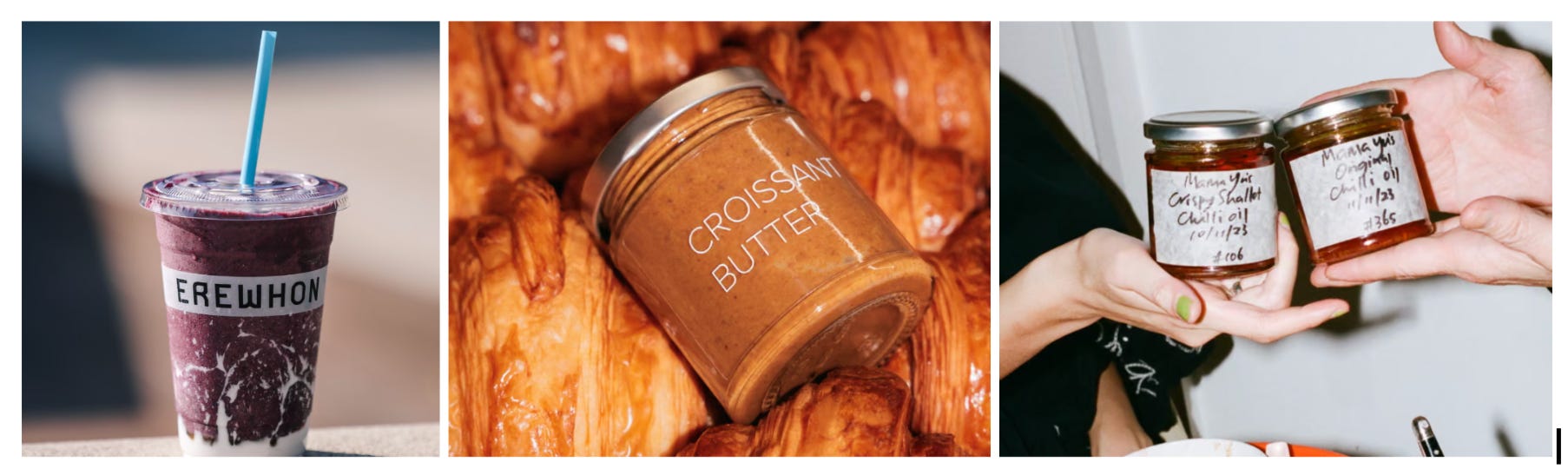
From Erewhon’s $19 smoothie that has become a Gen Z status symbol to condiments being reimagined as prestige products. In the UK, Delli, an online retailer for independent brands, has doubled its condiment sales in the past year, with bestsellers including a £10 “croissant butter” and a £6.99 Malaysian Chinese chilli oil. Waitrose has reported an 18% rise in condiment sales in the last month, with Ottolenghi’s green harissa paste (£5) and miso pesto (£4) both up 13%. Even mainstream players like Marks & Spencer are echoing this shift, with sales of truffle mayo (£3.25 versus £1.50 for classic mayo) up 10% year-on-year.
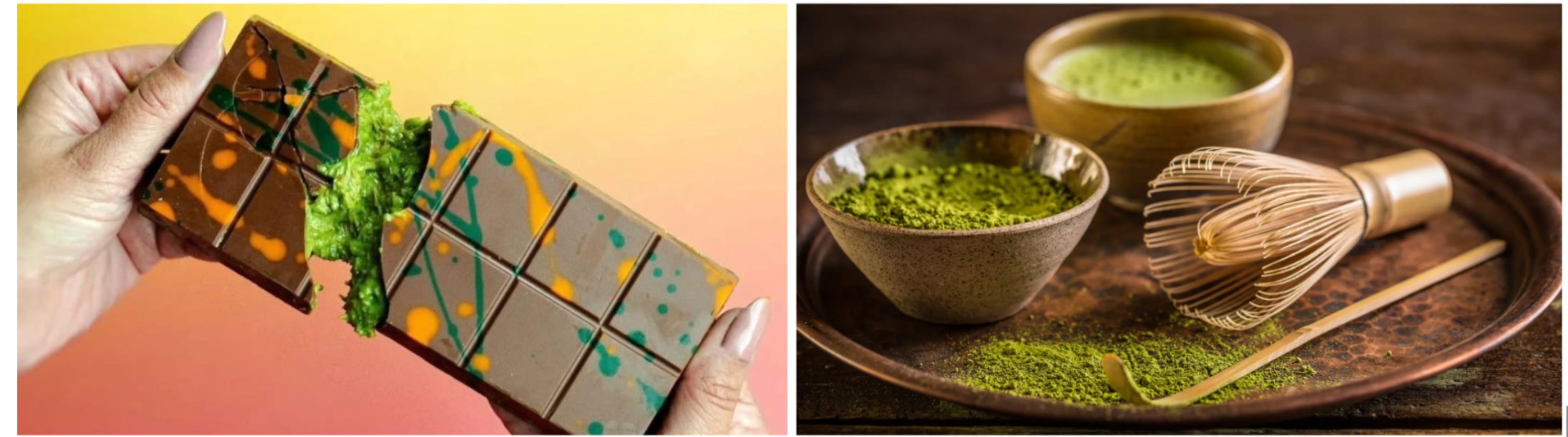
Dubai’s viral chocolate is a perfect symbol of food gone boujie. Fix Dessert Chocolatier’s 2021 creation, “Can’t Get Knafeh of It,” exploded on social media in 2024, its jewel-like textures giving it the aura of a luxury accessory. Limited editions, café riffs, pistachio shortages, even legal disputes followed, a proof that a single snack, when glamorised, can become a global icon. The same shift is seen in matcha: once a humble Japanese tea, now rebranded as a $8 latte and premium dessert ingredient, it has become a fashionable wellness luxury. In a cost-of-living crisis, food has offered people a way to feel luxurious without the guilt or burden of high expense.
People are tasting luxury via food
Food has moved on from being just about comfort. Today it is styled, hyped, and positioned with the same glamour once reserved for fashion. It has turned into a cultural accessory. From matcha lattes paraded by celebrities to viral chocolates that travel like couture drops, food is being treated like fashion, it’s flaunted and
sought-after. The difference is people don’t have to save big to buy it, they can get it instantly.
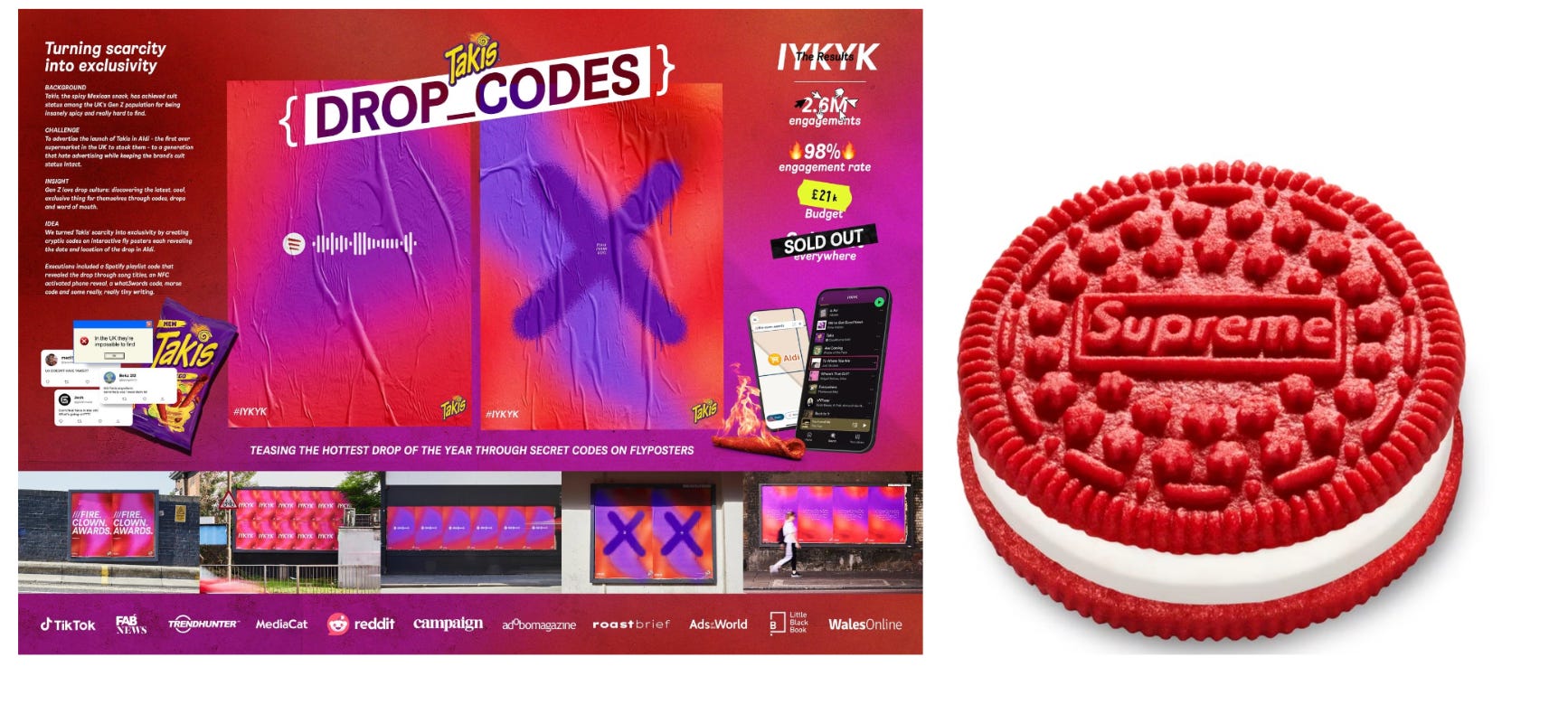
Take the AldI + Takis drop campaign, where cryptic “Drop Codes” in-store turned snack hunting into a streetwear-style hunt for exclusivity. Or consider how Oreo teamed up with Supreme to create a red, logo-emblazoned cookie that sold out instantly and now changes hands for thousands on resale marketplaces . These were casual brands elevated to the level of fashion exclusivity.
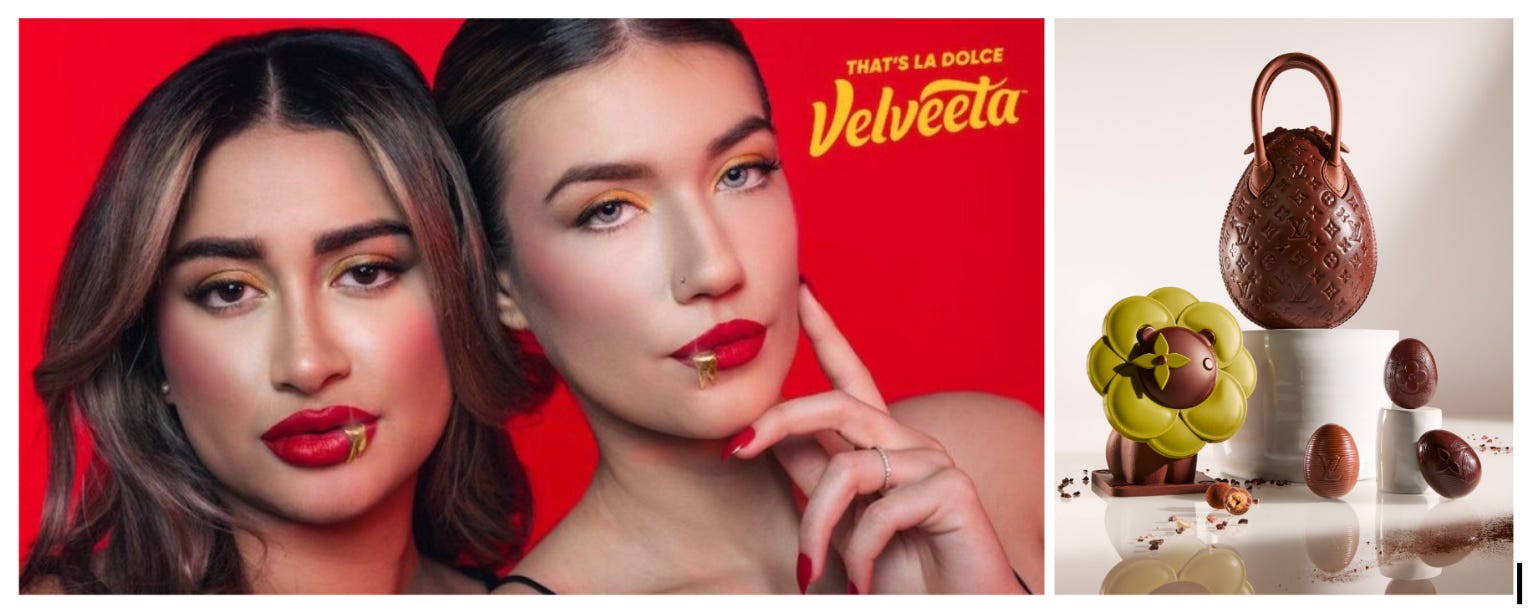
Others are leaning into glamour with more playful cues. Kraft Heinz’s Velveeta collaborated with celebrity jeweler George Khalife on the Drip Lip Cuff — a 14-karat gold ornament shaped to mimic melted cheese on lips. Absurd, boujie, and dripping with irony, it blurred the line between food and accessory, making indulgence wearable and fashionable. Similarly, Louis Vuitton transformed its iconic bags into edible chocolate Easter eggs, designed by Nicolas Ghesquière, showing how luxury fashion itself is crossing into food as an extension of brand aura. At the high end, luxury brands are literally serving their identities on plates. Armani Caffè’s India debut in Mumbai and Dior Cafés worldwide allow people to get a taste of luxury, in case if buying their conventional products feels distant.
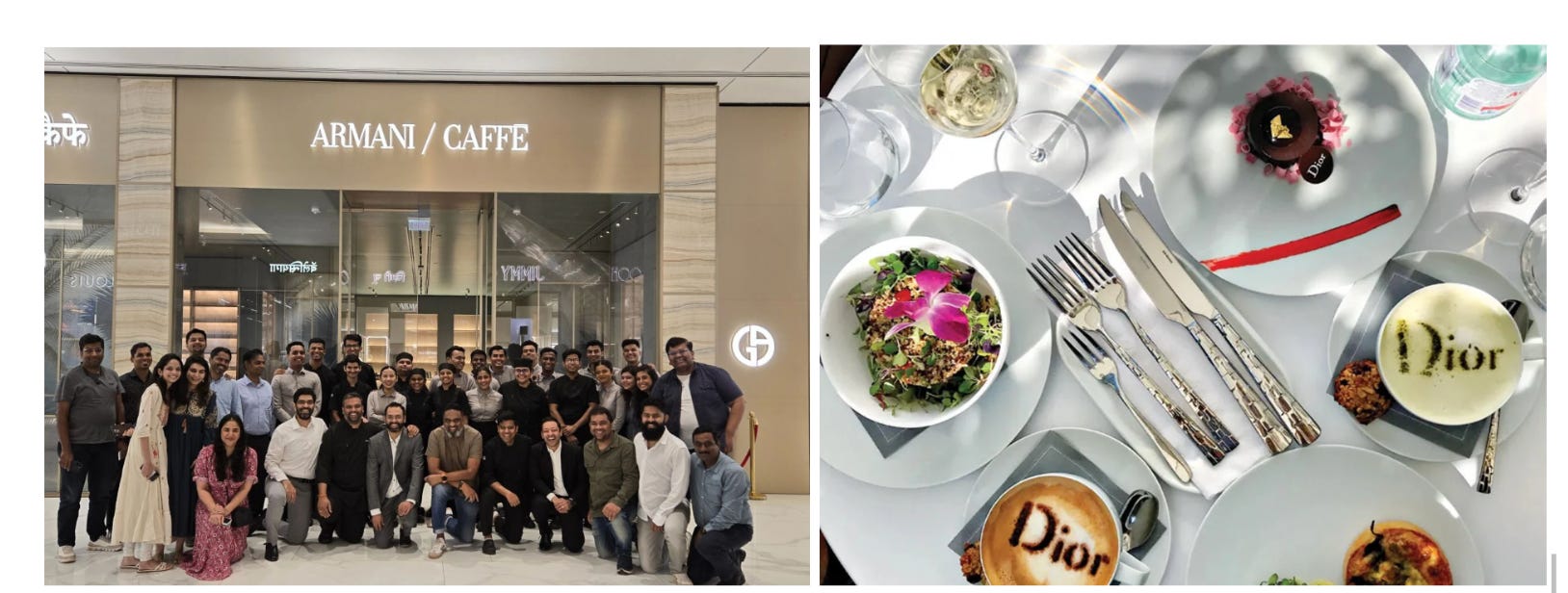
People are giving up weddings, houses, and holidays due to high costs, yet they look for small ways to taste luxury in the everyday. The long term is shrinking, so the
short-term has to over-deliver. This signals a shift in aspiration. During tough times, desire doesn’t disappear under pressure, it adapts and finds new cultural codes.
Food has become the simplest way to upgrade the ordinary, turning small moments into progress. A latte that feels like an achievement. A limited-edition snack with the thrill of a fashion drop. A condiment that signals sophistication. What people are really buying is not ownership or escape, but the feeling that life is still moving forward. Proof that even in sticky situations, a touch of luxury is still within reach.